A Land of Limestone Ledges and Red Sandy Soil: Part 2
Continued from: http://vintagetexas.com/blog/?p=790
In my search to define Texas terroir [the sense of place], I often stop to listen for voices of the human spirits that linger in the rustle of tall grass, the gush of spring water on slab limestone, or the rush of windblown sandy soil. These are the voices that tell of the land’s history, its potential, and the past and future trials that test the will of those that try to harvest its bounty. I also listen for the unsaid words that are held back when a grower contemplates his lost harvest produced by a late spring freeze. These are the words that define the Texas wine experience.
High Technology and Hybridization
By the 1860s, the Civil War in Texas brought further strife, secession and outright man-on-man brutality, pitting family against family and brother against cousin. As documented in the “Hoodoo Wars” that followed around Mason County, the fighting finally stopped when there were not enough participants found standing to sustain the conflict. What lay in the war’s wake was a state far from industrial centers that depended heavily on its agriculture wits for its survival. As native hostilities ebbed, land was cheap, cotton was king, and hordes of wild cattle were economic opportunities for those that had the stomach for hard labor, long hours and would risk of life and limb in the vast untamed spaces of Texas.
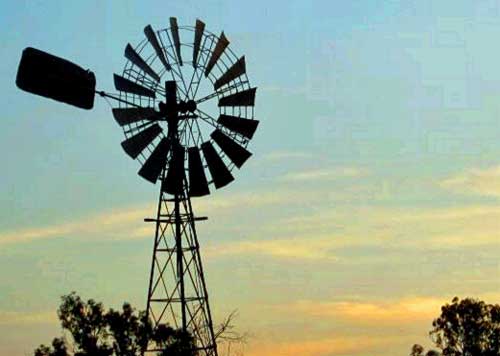
Later in the nineteenth century Texas became a generally more hospitable place and high technology, like windmill irrigation and barbed wire, helped facilitate crop cultivation in desolate areas. Thomas Munson (www.tvmunson.org), a Texas transplant, spent years on horseback trekking on dusty trails throughout the state, indentifying and categorizing native grape varieties.
As a horticulturalist living in Denison, Munson also experimented with grape hybridization crossing French varietals with more rugged native varieties. Some say that he traveled over 50,000 miles to complete his research, an amazing physical exploit for a man of his generation. Munson is most famously remembered for the root stock from native Texas grape vines that he sent to France in the late-1800s that were used in a grafting program to save the French vineyards from widespread devastation from a soil louse known as Phyloxxera. Today, every bottle of French wine has its roots in Texas history and owes its viability to Mr. Munson.
In 1883, the French Minister of Agriculture, came to Denison Texas and conferred the Chevalier du Mérite Agricole (The French Legion of Honor) to Munson for his work in saving the wine industry in France. Thomas Edison was the only other American ever to receive this award.
Munson’s work in Texas identified thirteen varieties of wild forest grapes colloquially known as “Muscadines”. He discovered that this category actually included many wild grape species, two of the most common of which in Texas are the Mustang Grape (Vitis Mustangensis) and Muscadine Grape (Vitis Rotundifolia). These were the grapes of Texas localities like Grape Creek, Grapeland, and Grapevine, able to withstand prolonged periods of hot, dry and dusty conditions so common to Texas. Texas farmers quickly found a recipe for making these grapes into stout, sharp-edged yet palatable wines by fortifying them with sugar and more sugar. With this penchant for sweet wines, it is understandable why some say Texas wine drinkers to this day still have a lingering “sweet tooth”.
Hard Hit by Prohibition
Following T.V. Munson’s time through to the early twentieth century, grape growing, particularly cultivation of hybridized Mustang or Muscadine grapes for winemaking was evolving into a rural endeavor. According to agricultural surveys in several Texas counties, this business activity was even to the point of being commercially viable. The number of Texas wineries grew until 1920 when Texas had over 50 wineries. However, this all came to an end that year with the ratification of the eighteenth amendment to the United States Constitution, also known as the National Prohibition Act, or the Volstead Act.
While prohibition legally ended in 1936, it left a complicated and arcane set of laws pertaining to the production and sale of alcoholic beverages and a confounding patchwork of “wet”, “dry” and “damp” areas around the state. A brutal fact of life in Texas was that most rural areas were dry – meaning that until the law was changed in the late twentieth century (nearly fifty years after the end of Prohibition) the production, sale and consumption of alcoholic beverages of any type was outlawed. Little or no distinction was made between wine, beer or distilled spirits. The temperance movement driven by religious fervor is understandable. For Texas cowboys and settlers faced with the reality of a hostile existence in Texas, a strong alcoholic beverage was often an escape and a release. Accounts also show that, at times, it was also was the fuel that challenged civility. Yet, during prohibition, legal alcoholic beverages were simply replaced by homemade distillations made from readily available corn, rye and other grains made in wood burning stills hidden among the tucks of cedar or on remote limestone ledges.
The upheaval of the period of prohibition to the Texas wine industry was so complete that after prohibition’s run, only one Texas winery remained – Val Verde Winery in Del Rio, Texas, that was originally started in 1883 by the Qualia family. Val Verde Winery survived by making sacramental wines and selling grapes to home winemakers. In the tradition of the original Spanish missionaries, Val Verde Winery, on its settlement near the Rio Grande, still operates and is one of the oldest wineries in North America. It was only in the late-1990s that the number of Texas wineries would finally exceed the pre-prohibition number.
The post prohibition maze of state laws governing the production of alcoholic beverages and a monopolistic alcohol distribution system in Texas placed a serious barrier to the development of a commercial wine industry. It was not until well after the end of prohibition (in fact, only about thirty years ago) that Texas gave birth to a modern commercial wine industry transitioning from primarily Muscadine, French-American hybrid and fruit wines, to growing and making wine from classic European varietals (Vitis Vinifera) with well known names like Chardonnay, Riesling, Chenin Blanc, Cabernet Sauvignon, and Merlot. This list is now expanding to many varieties of grapes with less familiar names that were bred by their Mediterranean heritage to handle the warm Texas weather. These varietals include: Syrah, Tempranillo, Mourvedre, Grenache, Viognier and Roussanne.
The Challenges of the Future
It has been a slow hard process to untangle legal obstructions to favor wine production and distribution from the growing number of smaller, family-run wineries, and to develop growing techniques in Texas to support the cultivation of classic grape varietals of Europe. Simply put, the “text book” on Texas grape growing and winemaking is still being written; the ink is still wet with many pages still blank. Many challenged that wine “grape farming” just could not be done in Texas…. the heat, humidity or soil just wasn’t right, or there were too many “critters” and diseases that would render the vines into dry sticks in the hot summer sun.
Today, the good news is that, through the long, hard scrabble, Texas has bred some of the most fervent lovers of its local wines. The vast majority of the premium wine produced in the Texas is consumed by Texans that now comprise the fourth largest wine consuming state in the nation. It turns out that there may be no other state in the Union that so actively supports its own in-state wineries the way Texas and Texans now do.
Texas is also the fifth largest wine producing state following California, Washington, New York and Oregon. If you will indulge this first of my many sidebar comments; a good test for your wine friends is to ask them to name the top five wine producing states in the United States. They will undoubtedly ramble through the first four states with only a little effort, albeit not in the right order, perhaps. When they come to number five……the blank look will usually overtake them followed by a blabbing litany of wrongly named states.
As hopefully evidenced by my ramblings, the Texas wine experience is not a mere replicate of that in California, or as a matter of fact, anywhere else. The modern Texas wine experience is fresh, young and still developing rapidly, but overlaid on the spirit of Texas encounters and challenges past and the oldest wine culture in the Americas. It is being crafted by people with memories of the harsh realities of a sometimes unforgiving land, but sustained by their vision, grit and gumption. We need to offer a well deserved thanks to people like McPherson, Auler, Becker, Cox and Newsom that have ridden the point on this long, hard journey and down a hot, dusty and at times perilous trail toward the evolving Texas terroir. Equally, we need to encourage people like Bingham, Reddy, Bruni, Brennan, Constable, Haak and many more that are experimenting with the future offerings of the Texas wine experience.
A man that honors me with his friendship, Chesley Sanders, has aptly summarized the Texas wine experience when he said….
“Texas wine is the chill of a blue norther tempered by the fire of the summer sun. It’s the fierceness of a spring thunderstorm calmed by an endless sky full of countless stars, and the stick of a prickly pear cactus soothed by a bluebonnet’s kiss.”


Check out what a California wine writer has to say about Sandstone Cellars V (Red Blend) at: http://fullpour.com/2009/08/sandstone-cellars-v.html
More good news for Texas wines. But, some Caifornians just can not appreciate that a wine from Texas can be really good – wines of Mason County terroir.
Russ