Search Results : judgment » Vintage Texas Blog

Sep 052012
 

Kiepersol Estates Vintner’s Dinner Featuring The Wineslinger Chronicles

Join us at Kiepersol Estates in the East Texas piney woods near Tyler, Texas, for a five-course gourmet dinner with author Russ Kane from VintageTexas – a.k.a. Doc Russ, Texas Wineslinger – featuring readings from his newly published book:

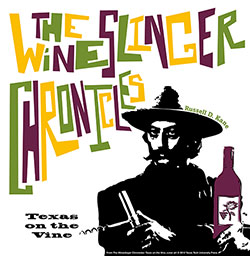
The Wineslinger Chronicles: Texas on the Vine

Each of the meal’s five courses will be expertly paired with a delightful Kiepersol Estate wine presented by Kiepersol winemaker Marnelle Durrette who will discuss the wines while Russ provides short enjoyable and reflective readings from The Wineslinger Chronicles highlighting his travels, meet-ups and tastings around the state. This special event will be hosted at Kiepersol Estates B&B at 7:00 pm on Wednesday, September 12th, 2012. For reservations, call 903.894.3300; email: bed_and_breakfast@kiepersol.com. Seating is limited. Click here for address and click here for prices that include a personalized and autographed copy of The Wineslinger Chronicles.

MENU
Duck Crostinis
Kiepersol Vit

Texas Shiner Bock Cheese Soup with Smoky Bacon
Kiepersol Viognier

Iceberg Wedge Salad with Chipotle Ranch and Grilled Peaches
KE Bushman’s Vitzin

Filet Mignon topped with Shrimp and Cabernet Barbeque Sauce
Kiepersol Cabernet Sauvignon

Home-Style Bread Pudding with Cognac Caramel Sauce
Kiepersol Port

Russ’s book, The Wineslinger Chronicles, has received critical worldwide acclaim for its literary, historical and engaging treatment of the Texas wine experience starting with its beginnings near El Paso in the 1660s, the period of emigrant farmer/winemakers the 1880’s, and its growth into a modern wine region in just the past 30 years. Readers have said that Russ’s stories made them feel like they were there in person to experience memorable events, talk with great people, and taste internationally award-winning wines that have made Texas the fifth-largest wine producing state in America.

– — – — –

“Doc Russ is the kind of guy who can mix blues, barbecue, and Barbera in a truly Texan way, and as he writes I can smell the mesquite smoke, hear the wailing  guitar and chew the High Plains ripe red fruit. Right on Russ!” —Oz Clarke, author of Pocket Wine Book and 250 Best Wines Wine Buying Guide

“With wine now made in all fifty states, the gift of the gods is on the way to becoming a national drink. In The Wineslinger Chronicles, Russ Kane tells the tale of Texas wine in an educational, friendly style. . . . So sit back and enjoy both Texas wines and Kane’s book.” George M. Taber, author of Judgment of Paris

– — – — –

Click here for chapter highlights from The Wineslinger Chronicles. I hope to meet you and share a bite, a taste and a true Texas story at Kiepersol Estates on Wednesday, September 12, 2012.

Russell D. Kane divides his time between Houston and Fredericksburg, Texas. A technical writer whose research spans three decades and has garnered two awards for writing excellence, he has covered Texas wines and cuisine since 1998 and now blogs on the subject of Texas wine at VintageTexas.com and writes a weekly column (Texas Wineslinger) in the Lubbock Avalanche Journal and lubbockonline.com.

 Posted by at 2:53 pm
Feb 072012
 

Heard It Through The Grapevine: The Wineslinger Chronicles to debut Saturday, Feb. 18th at TWGGA Conference

“With wine now made in all fifty states, the gift of the gods is on the way to becoming a national drink. But each state has unique growing situations, and it’s not yet certain where truly great American wine will be produced. In The Wineslinger Chronicles, Russ Kane tells the tale of Texas wine in an educational, friendly style. . . . So sit back and enjoy both Texas wines and Kane’s book.” — GEORGE M. TABER, author of Judgment of Paris

If you’re among the wine-and-grape-industry professionals attending this year’s Texas Wine and Grape Growers Association (TWGGA) Annual Conference in San Marcos, TX, Feb. 16-18, you’ll be able to attend a brief release ceremony and catch a brief reading by the Texas Wineslinger himself, Doc Russ Kane, during Saturday’s Learning Luncheon, 12:00-1:45, with book signing and sales to follow that afternoon and prior to TWGGA’s Gala and Auction Dinner that evening.

At the Live Auction, following dinner, I will offer up the first copy of The Wineslinger Chronicles (Numero Uno) which I will personalize and autograph for the winning bidder. So, bid high and big often.

These events will kick off the release of my new book, in Texas and nationwide, of The Wineslinger Chronicles: Texas on the Vine, a delicious collection of essays on Texas wine culture and history cultivated over the author’s years of blogging at VintageTexas.com.

But, if you can’t attend this event, you’ll have the chance to meet the Wineslinger at events around the state this spring, in Fredericksburg, Houston, Austin and Lubbock.

– — – — –

Touring Texas wine culture with one of the state’s best known connoisseurs  

The Wineslinger Chronicles 

Texas on the Vine

Russell D. Kane
Foreword by Doug Frost
$29.95 | cloth | 978-0-89672-738-0
$19.95 | e-book | 978-0-89672-744-1

To purchase a personalized and autographed copy of the book online, go to: http://wineslinger.net/purchase-book/

For reviews of The Wineslinger Chronicles, go to: http://wineslinger.net/book-reviews/

– — – — –

 Posted by at 10:38 am
May 042011
 

Judgments of Texas Wine: Time for Another Texas Two-Sip. Join Me at Culinaria in San Antonio

Where, What, When: Culinaria Wine and Culinary Arts Festival for the Texas Two Sip on Saturday, May 14, Hilton Palacio del Rio Hotel in San Antonio, Texas, 5:30 p.m. – $25 pre-sale, $35 at the door.

If you know food and wine writer, Rob Walsh, like I do, you know that good ol’ Rob has not always been an outspoken fan of Texas wines. If anything, he’s been the outright opposite.

In a recent statement on HoustonPress.com, Rob came out and acknowledged both how far Texas wines have come in terms of quality and how far he has come in terms of accepting them. He said, “If you haven’t had a glass of Texas Viognier yet, put it on your “to drink” list. It’s a lovely white wine with huge floral aromas and flavors reminiscent of apricot and peach. Texas wineries make some of the best Viogniers in the world. I never thought I’d be calling Texas wines the best in the world, but it looks like the “Judgment of Texas” has arrived.”

In his statement, the use of the term, “Judgment of Texas”, Rob makes reference to The Paris wine tasting held in 1976 often called the “Judgment of Paris“. It was a wine competition organized in Paris on 24 May 1976 by Steven Spurrier, a British wine merchant, in which French judges did blind tastings of top-quality Chardonnays and Cabernet Sauvignons from France and from California. A California wine rated best in each category. This tasting was a monumental moment in the course of California (and new world) wines that caused surprise. At that time, France was regarded as being the foremost producer of the world’s best wines. At the time, Spurrier sold only French wine and did not actually believed that the California wines would surpass the French wines in the tasting.

Robb admitted that the change in his perception of Texas wines came in 2007. He said, “My Judgment of Texas” moment came on a Saturday afternoon in late April of 2007. At the Buffalo Gap Wine and Food Summit that year, I was a panelist for the Texas vs. The World Wine Tasting. Austin wine writer Wes Marshall put on the blind tasting. I love his style — he used Brown paper bags to disguise the bottles.

I’ve always considered Steven and I kindred spirits of sorts. On numerous occasions, I’ve put Texas wines to the test: always in blind tastings and putting them up against highly rated, 90+ Wine Spectator wines from around the world. Examples include things I’ve posted before on VintageTexas:

The Judgment of Houston:  The Wine Society of Texas organized “The Great Texas Conundrum” as part of its 6th annual Texas’ Best Wine Competition at the Conrad Hilton School of Hotel and Restaurant Management at the University of Houston. Approximately 150 wines entered the competition from 31 Texas wineries. It was a double-blind tasting and judging was based on a modified University of California Davis 20-point evaluation method conducted with noted wine experts from around Texas. Click here for more.

The Judgement of Bryan Texas: At Messina Hof Winery and Resort in Bryan, Texas, winery owner Paul Bonarrigo put it on the line at the Messina Hof Twitter Taste-Off. The tasting included recognized, premium and best selling non-Texas wines from around the world paired with wines from Messina Hof Winery. It was a blind tasting in which the tasters did not know if the wines they tasted were from Messina Hof or the non-Texas wines. Click here for more.

The Texas-French Wine Shoot Out: A truly eye-opening experience was when we brought together about 55 people encompassing a wide cross-section of wine experience and tasting skills at the Culinary Institute Marie and Alain LeNotre in Houston for a Texas French Wine Shoot Out. In this head-to-head competition, the best Texas Merlot and Cabernet-based wines and blends were tasted against a selection of quality French Bordeaux wines. Click here for more.

– — – — –

Well, get ready for another opportunity to challenge Texas wines head-to-head with the wines of the world. Come on down to the Culinaria Wine and Culinary Arts Festival for the Texas Two Sip on Saturday, May 14, Hilton Palacio del Rio Hotel in San Antonio, Texas, 5:30 p.m. – $25 pre-sale, $35 at the door.

Have some fun before the Culinaria Grand Tasting later Saturday evening at the Texas Two-Sip Tasting, where you will blind taste Texas wines against similar non-Texas wines from around the world.

Texas vs. The World; who makes the better wines?  You decide.

See the amazing strides in Texas wine quality since we stopped trying to emulate California and started to make the comparison between Texas wines and the wines of the old world: Spain, Portugal, Italy, Sardinia and southern France.

The Westin La Cantera Resort’s Sommelier Steven Krueger, Becker Vineyards Owner, Dr. Richard Becker and I will lead you through the Two-Sip Tasting, providing information about Texas’ popular varieties that are winning awards and gaining international attention. This event will be a great aperitif before the Grand Tasting.

For more information and tickets for the Culinaria Wine and Culinary Arts Festival and Texas Two-Sip, so to:

http://culinariasa.com/wine-festival/main/events.php

See you there!

 Posted by at 10:17 am
Jul 192010
 

Texas Wine Quality: Something that Will Get Even Better the More We All Talk About It

Realize that now Texas wineries have obtained a certain level of acceptance from consumers and support by the legal system in Texas. They can go to and sell wine at farmers markets and wine festivals statewide.  They can make wine and sell it from their tasting rooms, no matter if it’s in a wet or dry precinct [for those not in Texas, I am not talked about rainfall, here, but wet/dry for sale of alcoholic beverages]. But, I remember back to the days when a winery could do a public tasting, but legally the winery personnel couldn’t touch a bottle of their wine. Volunteers where needed to do that. Wine been a crazy business in Texas, but things have changed dramatically and it’s high time for all of us to focus on wine quality.

I left Houston yesterday morning, traveling north on I-45. Within the first hour, I was up in Montgomery County and facing a wall of tall green monsters; the classic piney woods sixty feet or more high lined the road and was joined by the huge statue of Sam Houston. Farther north, the land was dominated by lesser post oaks, some looking like green zombies with long shaggy hair and outstretched arms formed from tentacles of wild grapevines. Still farther north as I approached the blackland prairie, the black bark and lime green leaved mesquites made their appearance, a weed tree to most farmers and ranchers, but one that makes its considerable contribution to Texas cuisine through its oh so good smoke when burned.

I spent the afternoon with Gabe Parker at the Homestead winery in Ivanhoe (http://www.homesteadwinery.com). It’s a place tucked down a narrow dirt road far back into the woods. You can imagine, only a few decades ago, the estate was home to a whole other kind of facility that produced a different alcoholic beverage known by many names – Moonshine, White Lighting, Bootleg Whiskey. Gabe started by acknowledging that he was likely the first member of the Parker family that produced a legal alcoholic beverage in North Texas.

Then, we talked about the evolution of the modern Texas wine industry, the changes in the laws that we now acknowledge to be supportive, and how they actually came to be. As I departed for the wine quality reception, Gabe said, “Keep in mind that wine quality in Texas is something that will get even better the more we all talk about it – growers, winemakers, and consumers.”

The festivities began Sunday evening at Grayson Hills Winery (http://www.graysonhillswinery.com) for a meet-up reception, some BYOB tasting and barbeque. It was a warm, muggy evening as we assembled alongside the vineyard.  There was an eclectic mix of wines that started with the standard set: Cabernet Sauvignon, Merlot and Chardonnay. There were also new varietal wines from Texas made with Mediterranean varietals such as Barbera, Dolcetto, Viognier and Vermentino. The Becker Barbera and Mandola (Duchman) Dolcetto were fresh from gold medal performances in recent international wine competitions.There was also a Prickly Pear (Tuna) wine, a roadside grown Mustang grape wine, and even a chili pepper infused white wine that nobody seemed to have the courage to open.

We reassembled this morning at the T.V. Munson Center at Grayson College (http://www.tvmunson.org) for Wine Quality Boot Camp. Dr. Roy Mitchell, the camp commander called everybody to attention. The Monday morning presentations that followed addressed the concept of wine quality. It’s usually sensory based and can include comparisons to classic styles. However, it may include confrontation with historical critics (the gatekeepers that pass judgment such as wine writers), or judges in wine competitions. It can also get into analytical parameters that involve lab tests and field evaluations. From there, it get even more complicated as it gets into varietal character, wine styles, purity, flaws and complexity. Throw in doses of personal tasting preferences and winemaker’s ego and things really get more interesting [maybe even a bit confrontational] than easily quantified.

I think most here agreed that it’s not an easy subject to approach. In warm growing regions like Texas, the discussion often goes to consideration of alcohol content, acidity, tannic qualities, color extraction and stability, and wine longevity.

So, for the next day and a half, we will try to address and discuss these issues and hopefully, with only minor interjections of name-calling and outright fisticuffs.

Jan 272010
 

A Tweet Victory for Texas Wines

Results from Twitter Taste-Off Where Wines from Messina Hof Went Head-To-Head with Best Selling Wines from Around the World

By DALE ROBERTSON Copyright 2010 Houston Chronicle

Jan. 26, 2010, 5:03PM

Russ Kane, pictured, is a writer, blogger and dedicated Texas oenophile who collaborated with Messina Hof impresario Paul Bonarrigo on the “Judgment of Bryan, Texas,” a tasting that was conducted “live” via Twitter.

Schedule conflicts plus a tastebud-numbing cold forced me out of a recent groundbreaking blind tasting at Bordeaux on the Brazos, otherwise known as the Messina Hof Winery and Resort. But, because living vicariously is better than not living at all, I have invited Russ Kane, the writer, blogger and dedicated Texas oenophile, into this space today to provide a synopsis.

The Judgment of Bryan, Texas, which Kane collaborated on with Messina Hof impresario Paul Bonarrigo, doesn’t appear to have yet rocked the wine world like Steven Spurrier’s Judgment of Paris did in 1976. But it seems the event could be remembered as at least a semi-seminal moment in the evolution of outsiders’ perceptions of Texas wines.

That the tasting was conducted “live” via Twitter alone makes it noteworthy. One participant, Dallas “Wine Curmudgeon” Jeff Siegel, who covered ballgames in a previous life, observed that instantly “tweeting” his impressions was tantamount to doing “play-by-play.” And what better format to use to analyze the magic juice in front of you?

As Kane said, “If you can’t give me a description of a wine in 140 characters, you might as well quit. The essence of a tasting should fit into a fairly short, concise format.”

More at: http://www.chron.com/disp/story.mpl/life/food/6836400.html

Jan 122010
 

The Judgment of Bryan Texas – Messina Hof Head-to-Head Taste Off

This past Sunday morning at Messina Hof Winery and Resort, winery owner Paul Bonarrigo put it on the line at the Messina Hof Twitter Taste-Off. The tasting included recognized, premium and best selling non-Texas wines from around the world paired with wines from Messina Hof Winery. It was a blind tasting in which the tasters did not know if the wines they tasted were from Messina Hof or the non-Texas wines.

Twelve flights of wines were presented, each containing two wines. The job of the tasters was to indicate which of the two wines in each flight was from Texas. We also provided our ratings using the UC Davis 20 point evaluation methodology for each wine using the following point breakdown: Color – 1, Clarity – 1, Aroma – 4, Balance 3 – , Body – 2, Flavor – 4, Finish – 2, Overall Quality – 3.

The wine line-up was as follows:
Flight 1 – Messina Hof Gewürztraminer 2008 ($9) v. Darting Gewürztraminer 2007 ($20)

Flight 2 – Escher Riesling 2007 ($13) v. Messina Hof Merrill’s Vineyard Riesling 2008 ($10)

Flight 3 – Sebeka Chenin Blanc 2008 ($11) v. Messina Hof Chenin Blanc 2009 ($6)

Flight 4 – Messina Hof Barrel Res. Cabernet Sauvignon 2006 ($9) v. Robert Mondavi Cabernet Sauvignon Napa Valley 2006 ($28)

Flight 5 – Messina Hof Private Reserve Zinfandel 2007 ($17) v. Alexander Valley Vineyard Zinfandel “SinZin” ($23)

Flight 6 – Messina Hof Merrill’s Vineyard Angel Riesling 2008 ($17) v. Schmitt Sohne Eiswein 2008 ($23)
Break

Flight 7 – Messina Hof Reserve Pinot Noir 2003 ($17) v. David Bruce Sonoma Coast Pinot Noir 2006 ($42)

Flight 8 – Messina Hof Barrel Res. Merlot 2006 ($9) v. Rodney Strong Sonoma County Merlot 2005 ($19)

Flight 9 – Iron Stone Reserve Cabernet Franc 2006 ($28) v. Messina Hof Barrel Res. Cabernet Franc 2005 ($9)

Flight 10 – Opus One 2003 ($167) v. Messina Hof Paulo (Bordeaux Blend) 2002 ($40)

Flight 11 – Messina Hof Paul Cabernet Sauvignon 2002 ($40) v. Silver Oak Napa Valley Cabernet Sauvignon 2002 ($105)

Flight 12 – Messina Hof Private Res. Port 2005 ($24) v. Fonseca Quinta do Panascal 2005 ($50)

I must admit that the results were quite surprising to me (on Twitter @VintageTexas). I had not done much blind tasting recently with most of my experience with Texas wines in a similar setting being five to ten years ago. So, when presented with these wines, I was set to use my previously developed biases and notions about Texas wine to try to discern the Texas wines in each flight. These qualities were namely: Very ripe to cooked fruit qualities and a lower perception of acidity and crispness in the wines. These are generally considered identifiers of warm climate wines.

The first thing that surprised me was the difficulty most of the panelists, including myself,  had in identifying the Texas wines. By and large, the Texas wines gave a first class performance comparable to their non-Texas brethren. A special shout-out goes to the two panelists that were able to correctly identify the Texas wines eighty percent of the time. These two panelists were Terry Thompson-Anderson (@girllovesfood) and Ross Outon (@rossthewineguy). I will readily admit that I correctly picked that Texas wine only half of the time. That is a fifty percent success rate, but I think that this is actually a good thing as the Texas wines were up to the quality point of the non-Texas wines and did not stand out with any difficient qualities. They were all well made wines. 

So much for my what now seems to  be my “very dated” rules of thumb for picking Teaxs wines. These Texas wines were admitedly clean and crisp, not what many would be expected from Texas. This shows that Texas growers have learned a lot about when and how to harvest their grapes, how to protect the grapes in transportation from the vineyard to the winery up to 500 miles away, and the winemakers know how to ferment and bottle the wines to preserve a fresh fruit wine experience.

The second surprise was that in many cases, the scores for the Texas from Messina Hof and the paired non-Texas wine were not that different. On the UC Davis 20 point method, the differences were generally only one or two points and not always in favor of the non-Texas wines. Several Texas wines from Messina Hof actually outscored the non-Texas wine in their respective flights. Examples of these wines were: Flight 2 – Messina Hof Riesling, Flight 9 – Messina Hof Cabernet Franc, Flight 10 – Messina Hof Paulo (Bordeaux blend). This latter scoring winner was most phenomenal since it was paired against Opus One at $167 per bottle versus $40 for the Messina Hof Paulo.

Robert Mondavi where ever you are, it is time to stop and take notice of Texas wines!

Many thanks to Paul and Merrill Bonarrigo at Messina Hof for hosting this “Judgment of Bryan, Texas” tasting event. They stepped up to take the challenge going head-to-head versus some of the most recognized wine brands and best selling wines in the  industry today. Based on this tasting, I can say that Texas has nothing to hide. More Texas winemakers and wineries need to step up and take the challenge testing their wines in the global marketplace.

The list of tasters at this event was:
Terry Thompson Anderson (www.thetexasfoodandwinegourmet.com)
Jeff Siegel (www.winecurmudgeon.com)
Martin Korson (www.centralmarket.com)
Ross Outon (www.linkedin.com/in/rossthewineguy)
Denise Fraser (www.denisefraser.com)
Jane Nickles (www. www.winespeak101.com)   
John Griffin (www.savorsa.com)
Russ Kane (www.vintagetexas.com/blog)
Dan Huerta and Phil Metzinger (www.brookshirebrothers.com)

Many other writers and wine aficionados followed the Messina Hof Taste-Off Twitter feed searching on the hashtag #Messina_Hof and made related comments. You too can search and find all of the event’s comments by going to www.search.twitter.com or www.hashtag.org.  When available, more information will be provided on the expanse and impact of this Twitter tasting event.

Addenudum:

Others that attended and have written about the event are given below:

Martin Korson at Central Market Blog:  http://moreplease.centralmarket.com/cm-news/messina-hof-blind-tasting/

Jeff Siegel – The Wine Curmudgeon: http://www.winecurmudgeon.com/my_weblog/2010/01/messina-hof-twitter-tasting.html

Paul V. Bonarrigo – Messina Hof Blog: http://blog.messinahof.com/2010/01/11/texas-versus-the-world/

Oct 112009
 

A Texas Wine and Food Experience – Gone to the Dogs

What better way to appreciate wine and food in Texas but through a common appreciation of dogs. To be specific, last night’s wine and food experience would not have happened but for such a situation.

Yesterday evening’s dinner was prepared and served by private chef, Gary Mularski of Dining Chez Vous (http://diningchezvous.com). It was “payment” for watching Gary’s new dog, a young female Labradoodle named Reagan. Reagan met us at the door with tail wagging and wet dog kisses.

To make a long story short….Labradoodles are the cute, smart and hypoallergenic hybrid creatures composed of Labrador Retriever and Poodle DNA. My dog, Rubio*, a two year old male Labradoodle, came from the same breeder (www.labradoodlebabies.com) in Beaumont, TX, as did Reagan. When it came time for Gary and his wife Joan to pick up their new puppy from the breeder, they had already committed to an out of town vacation. My wife volunteered us to watch Reagan for a week. My memory recalls a whirlwind time with Rubio and Reagan tussling, rolling, playful biting and tugs-of-war with everything and anything they could find. There were only a few short bursts of animal indignation when Rubio’s claim to his food was questioned. Little Reagan got the message.

[*NOTE: You can vote for Rubio in his Halloween get-up dressed as Sherlock Homes complete with “hounds” tooth cape and deerstalker hat. He is trying to solve the “Lost Bone Mystery”. Go to: http://www.thedogtrainingsecret.com/blog/inspector-rubio-sherlock-holmes-costume/]

We told Gary that his offer of a personally prepared gourmet dinner was a grand idea. However, I volunteered that he had to let me bring the wine (wink, wink). Chef Gary approved and emailed us the following menu that got my salivary juices flowing and provided input for my wine selections:

Roasted Pepper & Gorgonzola Bruschetta
Red & yellow peppers, Gorgonzola cheese, basil oil on garlic toast

Sweet Duck Sausage
Served with cherry compote, foie gras mustard & mixed greens with red wine vinaigrette

French Whole Wheat Baguette with Chèvre Parsley Butter

Braised Beef Short Ribs – Slow Braised in Red Wine
Served with caramelized Parmesan Polenta & orange glazed carrots

Pecan Chocolate Chip Pie
Served with homemade French vanilla ice cream

The reason for the “wink, wink” above, as you can probably guess, was because I was going to bring a selection of Texas wines. Gary and his wife had not previously sampled wines from Texas. Somewhat surprised with my complement of Texas wines, Gary said that he did not think that Texas had a climate for grape growing. Being in Houston, this is a judgment-in-error made by many locals and people from around the USA. I explained that, in Texas, the higher elevations, drier conditions and sandy soils in the western part of the state provide conditions not much different to those in well known wine regions like Rioja Alta in Spain, Bandol in the south of France, and the Mendoza in Argentina. While on a roll, I added that Texas is the state ranked fifth in the wine production just behind California, Washington, New York, and Oregon, and over 1 million people a year now visit Texas wineries.

The Starter

I realized that the starter and first course on Chef Gary’s menu required an intensely flavored white wine for a successful pairing with the bruschetta and duck sausage. The hint of sweetness in the sausage plate came from both the cherry compote and the addition of cherries in the sausage. Therefore, the white wine would also need to provide a sensation of sweetness, but crisp acidity and dryness to cut the fats in the cheese and sausage. To fit these requirements, I chose Brennan Vineyards (www.brennanvineyards.com) 2008 Viognier. While being dry and not oak aged, it yielded intense fruit flavors of white peaches and citrus. The mouth feel was full and the finish satisfying with the ability to combine with Chef Gary’s offerings of bruschetta with Gorgonzola and multifaceted duck sausage plate.

The Main Course

Braised short ribs are acknowledged to be one of the richest red meat preparations. This arises from immersion, slow cooking, and the reduction of a bottle of red wine with carrots, onions and tomato. It also gains intensity from the caramelized crust that forms on the surface of the meat during the final stage of cooking. Chef Gary’s preparation did not fail. It reached the anticipated pinnacle of opulence.

Realizing the intensity of this dish, I reached for two of Texas boldest red wines made so far. The first wine was Becker Vineyards (www.beckervineyards.com) 2005 Cabernet Sauvignon Reserve. It was well extracted and made with premium grapes from long time Texas grower, Neal Newsom (www.newsomvineyards.com) in his vineyard in the Texas High Plains Appellation near Lubbock Texas at an elevation of over 3,500 feet.  Hot days and cool night prevail in this region. The Becker Cab poured with a deep purple color into the glass, generous a full complement of fresh, ripe dark berry flavors rounded out with a dollop of toasted oak.

The second red wine was from Blue Mountain Vineyards (www.texaswinetrails.com/pat_j.htm), a winery in the land of the Marfa Lights (http://en.wikipedia.org/wiki/Marfa_lights) that was long acknowledged for its ability to make the best red wine in Texas. This wine was the Blue Mountain 1998 Cabernet Sauvignon made by legendary Texas winemaker Patrick Johnson. The Blue Mountain vineyard was located near Fort Davis, Texas at an incredible elevation near 5,000 feet where during the growing season the days typically reach ninety degrees, but the night time temperatures an plunge into the fifties. Regrettably, the taste of this wine will have to last in our minds forever as the vineyard is no longer in production with its vines having succumbed to Pierce’s Disease, the scourge of Texas grape growers. Despite its age, this wine showed excellent fruit extraction to match the intensity of sauce served with Chef Gary’s short ribs. It also had aged qualities gained during the past eleven years producing a dark red garnet color along with qualities of black cassis with hints of cedar and leather.

Dessert

The final course was dessert: Chef Gary’s Pecan Chocolate Chip Pie with almond crust served with his homemade vanilla ice cream…OMG! Wow, this southern favorite was never so good. It was sweet and nutty with lots of dark chocolate chips through and through. A splotch of his homemade ice cream on the side ameliorated a bit of the sweetness while yielding a sumptuousness that few desserts can deliver.

My sentiments with respect to a wine pairing for pecan pie can be summed up in one word – Port. I brought a bottle of Texas Kiepersol (www.kiepersol.com) Three Barrels Port. This port-style wine rested in oak for 32 months yielding a nose of almonds, caramel, honey, and jammy fruit.

After coffee and thanks to Chef Gary and Joan for the fine dining and wine pairing experience, and a few more puppy hugs and kisses, we bid our hosts adieu and made our way back home with a goodly sized piece of pie. I think that I could really get used to this personal chef thing!

Aug 272009
 

The Judgment of Houston Redux

With all of the talk about our recent Drink Local Wine Conference and Texas Twitter Taste-Off, I have had many emails that ask about other times that Texas wines have gone head-to-head with top rated (90+) wines from other parts of the known world. About a year ago, I posted a three part blog mini-series about a wine competition that I organized in Houston in 2004 that became known as the “Judgment of Houston”. The highlights from that blog series are given below with links back to the complete articles.

In reflection, I think that Texas wines have evolved in the positive direction since 2004 when we held that taste-off. Overal quality of the wines in the Texas Twitter Taste-Off was excellent.

The Judgment of Houston: Part 1

Rewind about thirty wine years to the mid-1970′s……France was king of wine and California was clamoring for credit. Then, on May 24, 1976, Harpers Wine and Spirit Weekly Magazine staged a double-blind tasting event that they called “The Great Cabernet Conundrum”.

This competition involved a head-to-head competition between top Californian Cabernets and the best French Bordeaux wines that was held in conjunction with The International Wine and Spirit Competition. Time magazine called the outcome “The Judgment of Paris” as the results sent reverberations around the wine world. Stag’s Leap Wine Cellars took the top spot and was catapulted into the upper echelons of winemaking, signifying that the California wine industry had come of age.

In this same spirit,  The Wine Society of Texas organized “The Great Texas Conundrum” as part of its 6th annual Texas’ Best Wine Competition at the Conrad Hilton School of Hotel and Restaurant Management at the University of Houston. Approximately 150 wines entered the competition from 31 Texas wineries.

Continue Part 1 – go to: http://vintagetexas.com/blog/?p=4

The Judgment of Houston: Part 2
The major conclusion of the “Judgment of Houston” was readily evident in the rankings of the top scoring wines and how the top Texas wines placed with respect to the non-Texas ringers. The judges did their job well. They correctly identified all of the non-Texas ringers to be worthy of either gold or silver medals. Furthermore, roughly thirty of the top scoring Texas wines placed competitively with these wines.

Only one of the ringers outscored all of the Texas wines, this was the acknowledged “Wow-Wine” – Kim Crawford Marlborough Sauvignon Blanc with its intense grapefruit kick and citrus tones. Ten out of the next eleven positions were occupied by gold medal Texas wines.

The following twenty Texas wines were intermixed with the well known ringers. This shows that a good selection of Texas’ best wines have the quality to compare favorably with perennial favorites like California’s Kenwood and Chateau Souverain, and noteworthy value wines from Washington’s Columbia Crest and Australia’s Yellowtail.

Most astounding in the results was the diversity of grape varietals and winemaking styles that the gold medal winning Texas wines represented: Five were Bordeaux-style wines based on Cabernet or Merlot, one dry rosé, one Sauvignon Blanc, and three sweet wines made from Muscat and Chenin Blanc.

Continue Part 2 – go to: http://vintagetexas.com/blog/?p=5

The Judgment of Houston: Part 3
In early May, a post competition taste-off of the top ten scoring Texas wines was held at the Grand Wine & Food Affair in Fort Bend County Texas. This was a winner-take-all public event where the attendees tasted and voted for their single favorite wine out of the top ten scoring wines competition. The winner was Becker Claret, Le Trios Dames. This was the same wine that tied in the scoring with Chateau Gruaud Larose, one of the top selling restaurant red Bordeaux wines.

There were also many other interesting insights into the state of Texas wines that where highlighted by this competition friendly yet competitive event.

One aspect that is particularly exciting was the high scores for many new Texas wineries. This included the 11th ranked Zin Valley Vineyards near El Paso for their Rising Star Zinfandel.

Driftwood Vineyards also placed well with their Longhorn Red, a blend of Sangiovese and Cabernet, and a floral, semi-sweet estate produced Muscat Canelli.

San Martino Winery received two silver medals for collaborations with Newsom Vineyard for their single vineyard designated Cabernet and Reserve Cabernet.

Continue Part 3 – go to: http://vintagetexas.com/blog/?p=6

That day in 2004, Texas wines had a good showing on a world wine stage. In Dallas two weeks ago, Texas wines also had a good showing with wine writers, bloggers and aficionados from around the USA. Texans can be assured that their wines are mostly good to excellent. To be honest, there are still some Texas wineries that have not yet gotten on a quality program; but they will fall by the wayside if they don’t change….survival of the fittest will take over. One problem is that many Texas wines are in limited production and consequently a tad expense. However, this will change over time as production increases and wines get into greater distribution both within the state and in export from Texas. In the meantime, enjoy Texas wine from quality producers, let your local wine shops and restaurants know which ones you drink and enjoy. This will help grow the market for the better Texas wineries that really deserve the business.

Jun 152009
 

Texas Wines Earn High Marks: 2009 Lone Star International Wine Competition

Medal Results from the 2009 Lone Star International Wine Competition at: http://www.txwines.org/competitions/lonestar_results.asp

The rest of the story……

Last week, I blogged about my trek across the highways and byways of Texas from Houston up to Grapevine, Texas: An appropriate place to judge a wine competition. The blog notes my reflections on Texas terroir and my mental preparations assessing shades of arboreal green in the Texas roadside scenery, at:  (http://vintagetexas.com/blog/?p=865). The wine competition was the 2009 (26th annual) Lone Star International Wine Competition (LSIWC).

In the LSIWC, nearly 500 wines from around the world were judged in over thirty categories by a panel of restaurant owners, sommeliers and other wine experts from Texas.  I guess that yours truly fits the latter category although I did successfully pass my first level Sommelier exam. The co-chairs that organized and oversaw the LSIWC were Barbara Werley, M.S., Pappas Brothers Steakhouse’s Master Sommelier and Beverage Director, the first Master Sommelier in the 26 year history of the event; and Michael Zerbach, long time chair of the event and winner of the John E. Crosby, Jr. Award for his achievements in increasing the stature and visibility of the Lone Star Wine Competition awarded by the Texas Wine and Grape Growers Association Board of Directors.

Four Competitions in One

Interestingly enough, the LSIWC is four, four, four competitions in one…. a Texas Competition, an International Competition, and a Limited Production Competition.  In the spirit of the local wine movement (www.drinklocalwine.com), wines qualifying for the Texas Competition must be 75% volume from Texas grapes. Additionally, for the first time the forth facet of the LSIWC included a Rising Star award for the best showing by a young Texas wineries in red and white wine categories. This new award was underwritten by Paul and Merrill Bonarrigo of Messina Hof Winery (www.messinahof.com) in Bryan, Texas.

Before talking about the competition results, I think that a short behind-the-scenes look at the process of the competition and wine judging is interesting. The LSIWC organizes the judges into panels of about five judges. All wines presented to the judges are tasted blind; this means that the judges do not know the names of the wines or wineries. The only data about the wines visible to the judges are the blend of grapes, residual sugar content and percent alcohol. Each judge has a tasting sheet and is given four judging cards that indicate: Bronze medal, silver medal, gold medal or no medal. After tasting and judging the wines, the judges are asked to raise the cards that indicate his or her ratings for the wines in a particular flight.

Effective Techniques of Wine Evaluation: Why? Why? Why?

I have discussed wine evaluation with many judges and in the past ten years tried different techniques myself. It is evident that there are many techniques that judges use. But, most importantly, good judges know not to judge based on their own personal likes and dislikes and rather focus on the quality of the wine. My personal approach is to try to understand the approach of the winemaker, starting my asking myself a few questions as I taste each wine. The questions are some basic WHYS. Why did the winemaker make this wine? Why did the winery submit this wine to competition? Why do I like or dislike the wine?

Due to the speed of the competition (each panel tasted 70 or more wines in two sessions per day), the judging process has to be simple, direct, and most importantly accurate. I look for a few basic qualities in the wines I am judging:

1. Color and aroma of the wine
2. Balance – alcohol, fruit, acid, tannin in combination leading to a pleasant wine tasting experience
3. Presence of flaws – sulfur, musty or fingernail polish smells or cloudy appearance
4. Varietal correctness – Does a Cabernet look, smell and taste like a Cabernet

This process takes about 60 seconds per wine and is an outgrowth of what I have learned from wine expert, Kevin Zraly. He calls it his “Sixty Second Wine Expert” (See: http://vintagetexas.com/blog/?p=417).

Based on this or similar methodologies, each judge develops a medal rating for each wine. At the end of all flights of wines, the judges present their results by showing the appropriate card. It might seem amazing, but much of the time, the judge’s ratings are bunched close together, particularly in cases of “no medal”. However, in a few cases we had divergent ratings and needed to discuss our results before coming to a final conclusion.

After the first day’s judging, the second day was focused on a comparative judging of the highest scoring wines to compete for the Grand Star awards (best of show) in various categories. During the second day, we had two very interesting situations arise. In the first case, we were judging for the Grand Star award in a white wine category. Three wines had identical ratings from the judges. A second round of voting was held and again the judges were completely deadlocked on these three wines. At this point, we asked for a referee, Barbara Werley – M.S., to independently taste the three wines and be the tie breaker. In the second case, we were judging a flight of fifteen red wines for a Grand Star award. This was a rather large flight, which makes reaching a consensus difficult. In this flight, the judges had to vote five times to narrow down the competition to a single wine.

Results of the Lone Star International Wine Competition

Further information and the medal awards from the LSIWC are available online at:
http://www.txwines.org/competitions/lonestar_results.asp

Most noteworthy were the following award winners from Texas wineries:

Texas Grand Star Winners
Fortified Wine – Haak Vineyards & Winery (www.haakwine.com), Madeira Blanc du Bois 2006
Red Table Wine – Driftwood Estate Winery (www.driftwoodvineyards.com), Lone Star Cab 2006
White Table Wine – Grape Creek Vineyards (www.grapecreek.com), Viognier – Lost Draw Vineyards 2008

Grand Star Limited Production Winner
Red Caboose Vineyard & Winery (www.redcaboosewinery.com ), Cabernet Sauvignon 2007

Texas Gold Medal Winners
Haak Vineyards & Winery (www.haakwine.com), Madeira Blanc du Bois 2006
Kiepersol Estate (www.kiepersol.com), Texas Merlot 2006
McPherson Cellars (www.mcphersoncellars.com), Grenache/Mourvedre 2007
Red Caboose Vineyard & Winery (www.redcaboosewinery.com ), Cabernet Sauvignon 2007
San Martino Winery & Vineyards (www.sanmartinowinery.com), Tempranillo 2005

If I had to pick one white and red wine from this year’s competition that were my personal favorites based on this judging, they would be Grape Creek Vineyards, Viognier – Lost Draw Vineyards 2008 and McPherson Cellars, Grenache/Mourvedre 2007. I also would like to have personal honorable mentions for the San Martino Winery & Vineyards, Tempranillo 2005 which was on my recent Grand Wine and Food Affair, Pick Six wine list (http://vintagetexas.com/blog/?p=738), and for Kiepersol Estate, Texas Merlot 2006. These wines exemplify the necessary combination of good growing practices and winemaking judgment. It was easy to answer the WHY questions for these wines. Also, several of these wines illustrate a trend for the future for Texas wines…..The focus on warm weather varietals that ripen well during our hot, sunny Texas summers.

Texas Rising Star Award Winners

This year’s winners of the Texas Vintner’s Rising Star Awards were KE Cellars for their 4 U Syrah, 2007 red table wine and Enoch’s Stomp Vineyard & Winery for their Blanc du Bois Off-Dry white, 2008, both outstanding wines.

Reflections

Overall, the LSIWC awarded 26 gold, 81 silver and 172 bronze medals to entries from fourteen states and several foreign countries. This year’s competition was a true testament to the Drink Local Wine movement in Texas. This competition shows that despite the current period of unfriendly weather in Texas with its late spring freezes, hail, recent summertime rains, and the constant war against Pierce’s Disease, award winning wines can be made successfully through the grit, gumption and determination that define Texas’s growers and winemakers.

Mar 162009
 

The Last Texas Pour Leaves Big Boots to Fill

Guest Blog by Chesley Sanders (Lone Star Wines)

Lone Star Wines poured its last taste of Texas wine this past Wednesday. I want to thank everyone in the industry that helped me in spreading the Gospel of Texas wines for the past 13 years. It has been an exhilarating journey and an honor to take part in seeing dreams become wineries and hard scrabble Texas dirt becoming wines worthy of anyone’s table.

Some of the proudest memories I have are from being the first to introduce to the Dallas Fort Worth Metroplex, and people from all over the world (especially those doubters [read snobs] from the left coast) to great Texas wines such as Becker, Blue Mountain, Brushy Creek, Sister Creek, Flat Creek, Texas Hills, Alamosa, McPherson, Sandstone, Mitchell, and the premium wines from Llano Estacado, Fall Creek, Cap Rock, La Buena Vida, and many more that age and indulging in my left-over  inventory cloud at the moment. I want to thank everyone that allowed me the honor of acting as M.C. at festivals, and tour guide on many trips to the wine regions of Texas. I believe the attendees had as much fun as I did, and we made a lot of disciples of Texas Wine.

It has been rewarding to watch the success of start-ups and the maturing of the “Old Dogs” into a viable base and support system for the whole industry. It has also been something of a vindication to see the Texas wine industry go from being the “Red Headed Step Child” of Texas agriculture to a viable, supported facet of the agricultural scene. A huge thank you is in high order for the hard work of wine industry political leaders, and Comptroller Susan Combs (who I once introduced as the best thing to happen to Texas wine since drip irrigation).

There have been some good comments on the importance of wine quality in the forum lately (See: Texas Winegrowers – http://groups.yahoo.com/group/Texas_Winegrowers). After having poured a few tastes of Texas wine (I lost count somewhere after a hundred thousand) to every possible demographic group of consumer from every corner of the world, I would like to offer some observations.

1. When I first started selling Texas Wine there were 24 Texas wineries, as you know today there are about 150. I have tasted the wines from most all of them. Though 13 years ago there were good wines and bad wines the ratio of really bad wines to good wines was much smaller than it is today. If you are making wine, and putting it before the public, and you haven’t tasted at least 150 different wines from different parts of the world in the past year, put your ego in a bucket, set it out the back door, and find someone who has; someone that you can trust to be brutally honest with you about your wine, and take heed.

2. Until you can consistently make a good honest bottle of  $14 wine from decent grapes forget about “reserve” wine from high dollar grapes and new French Oak. You can’t cheat the learning curve, and you’re wasting grapes the industry desperately needs.

3. Don’t confuse what happens in your tasting room with life in the real world. You have a captive audience who sought you out, all of the tasting room ambiance, and your best sales people one-on-one. Just because a wine sells for $25 or more in your tasting room doesn’t mean there is a problem with everyone else outside your tasting room who can’t sell it for that price. It means there is a problem with your pricing or your wine.

4. Take advantage of every one of the great educational opportunities that are becoming available. Just remember, a couple of courses start you on the path to becoming a wine maker, they don’t make you one. Seek out the advice of successful professionals. All of the best have been at it for decades. Hire them!

5. Don’t let medals, especially from regional competitions, cloud your judgment. They can help as marketing tools, but what has been said about wine judging short comings lately is an understatement. 90% of the judges in any given competition don’t know Shiraz from Shinola.

6. Honesty! This is getting a little better; it still has a long way to go. A winery is a winery, a bottling operation is a bottling operation, a tasting room is a tasting room, Texas has no Napa Valley (California has no Hill Country, nor High Plains, no Cross Timbers, nor mad men on the Gulf coast), and most of all TEXAS WINE IS TEXAS WINE, don’t try to hide the truth. Don’t offer your retailers, or your customers, much less submit for competition, a “best barrel” sample, and then sell them a blend of everything else. It’s not that hard to figure out, hurts everyone in the business, and destroys respect for your brand.

7. When you reach the Major Leagues, and are running with the Big Dogs, don’t forget the people that helped “Bring you to the dance”.

8. Have Fun! It’s wine. Like I say, “Life is made for livin’, Wine is made for drinkin’, and Lips are made for kissin’.”

Cheers Y’all,
Chesley
—————————————-

Personal note from Russ Kane:

I appreciate Chesley as a good friend, fellow Texas wine aficionado, Fort Worth fireman, and even cowboy philosopher. He has a way with words and offered one of the best vignettes on Texas wine that, still to this day, best sums up the Texas wine experience….

“Texas wine is the chill of a blue norther tempered by the fire of the summer sun, the fierceness of a spring thunderstorm calmed by an endless sky full of countless stars, and the stick of a prickly pear cactus soothed by a bluebonnet’s kiss.”

This description gives you the feeling like you are on the trail with your trusty horse and bedroll. You are camped down for the night and are savoring a full-bodied Texas Cabernet around the camp fire with a few of your closest compadres.  Sweet Jesus…..this is definitely NOT California wine country. It’s a different brand of wine experience right here in Texas!

Related Posts Plugin for WordPress, Blogger...