Texas Wine blog
The Wine Blog Searching for Texas Terroir Friday, 3 September 2010 - 0:52
Publications
Comments

A Land of Limestone Ledges and Red Sandy Soil: Part 1

A Land of Limestone Ledges and Red Sandy Soil: Part 1

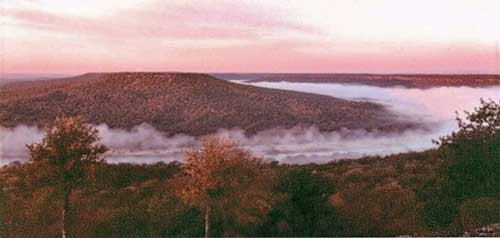
I sit here thinking about where the Texas wine experience began.  The spring sun warms my face as I gaze out over freshly greened prominences to the north from a perch high on an eastward-pointing finger of the Edwards Plateau: My personal piece of Texas. If I let my mind override my eyes, I can “see” the defining moment presented before me. The initiation predates me as well as the past generations of people that call themselves Texans.

The Beginning

Eons ago its genesis was in a vast and desolate inland sea predating human consciousness; a wet and hostile place. At an unhurriedly, nearly immeasurable pace over millions of years, the shells of countless creatures were deposited. I see their vestigial remains in fossil records at my feet. They are often conjoined with red sandy minerals brought from estuarial flows from even older continental shores. From time unfathomable, the land of limestone ledges and red sandy soils were exuded from their murky depths by powerful forces into the light of the Texas sun as if looking for purpose.

A half a world away in a similar geological time, an equivalent process was occurring over parts of Europe and Asia. The Mediterranean Sea, enlarged greatly from its present size provided its own incubator for geographical birth over France as did the ancient sea over Texas.   Then, a millennium ago, the Phoenician Greeks landed on the rocky Mediterranean shore near Marseilles in southern France. The Greeks brought their civilization, commerce, and their grape vines starting a new human age.

In a flash of time compared to what had happened before, Romans and then the Catholic clergy continued vine cultivation. The overlay of empires and kingdoms pushed vineyards farther inland through France and Europe looking for just the right conditions: Soil, climate and more. For a thousand years of modern history, humans made slow progress by trial and error, honing artisanal crafts of grape growing and winemaking, into a distinct and definable wine culture. They derived the land-man conjunction that we now call “Terroir”, the sense of place that describes the local essence of wine.
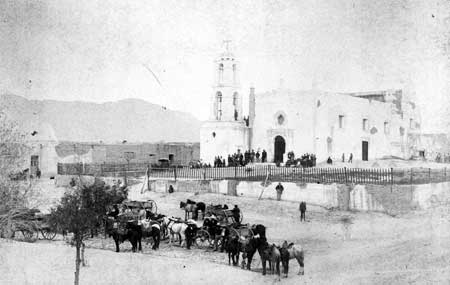
Much later, a similar human event came to Texas. In 1659, Spanish missionaries and a hand full of Christianized native families made their trek into uncharted regions northward from Mexico. The Spanish were driven by the forces of exploration and conquest overlaid on a foundation of Catholicism that brought waves of Europeans to the Americas. Hot, dusty missionaries arrived with carefully protected vines from which they would prepare their sacramental wine.

From the historical records, the first vestige of European wine culture arrived in Texas over one hundred years before being introduced to California. The epicenter of this movement was El Paso del Norte on the banks of the Rio Grande. It traveled with Spanish missionaries that cultivated hearty “Mission” grape vines from Spain, having been previously  planted and likely hybridized in Argentina and Peru along their path. Quality and wine appreciation were not necessary ingredients in this early wine culture on the Texas frontier as much as was the “blood” of the grape a necessary ingredient in the Catholic liturgy.

Wild Grapes for a Wild Land

Yet, even before the Europeans, evidence collected from ancient Texas campsites and small villages show indigenous gatherers of this region harvested native grapes that grew plentifully around the creeks, streams and bayous. Grapes provided periodic sustenance for native peoples along with an appealingly sweet opportunity when found ripe, thus augmenting their otherwise bland diet. These were hearty wild grapes, hybridized by nature to withstand a wild and, at times, an inhospitable land.

This wild new land called “Tejas” [a name derived from a local native word for 'friend'] was anything but friendly to missionaries and the settlers that followed. The native tribes were mostly unreceptive to Spanish conquest. Some were accepting, but mostly to gain protection from enemies or to gain an advantage against adversaries in battle. In reality, when the Spanish brought their wine culture, this region was hardly prepared to accept it. Tejas was at the frontier’s edge of the Spanish domain and was never really subjugated and its native owners did not readily accept their presence. Spanish reign over the region continued for a century and a half when finally, in an unholy union, it was caught in a whirlwind with the westward ebb of Anglo-American settlers from the eastern states lead by men such as land impresario, Stephen F. Austin. 

Austin, well known for turning a good word, reportedly said, “Nature seemed to have intended Texas for a vineyard to supply America with wines”. This may have been a bit of creative bluster from a speculator looking to draw settlers to Texas: A venerable land of wine and honey. While Austin’s description was in part true, due to the abundance of wild grapes in Texas, it was not necessarily on the mark when it came to the qualities of the region’s wild wines when compared to their European counterparts.

The nineteenth century brought the long hard fight for sovereignty over the land, first pitting the Anglo settlers against their Spanish governors.  From this brutal conflict arose the Republic of Texas, an independent yet poor nation and then, in another ten years, the infantile state of Texas.  Wine was not yet the local drink of choice. Something much stronger was needed to remove the sting of hot, dusty days and to calm the nerves after skirmishes with hostile natives. However, with the start of Texas economic development and an amount of civility to limited portions of the state, wine consumption started to surface in Texas. Evidence of this comes from the personal effects of its comfortable citizenry like the Republic’s native son, and liberator,President Sam Houston.

While Houston was best known for his early buckskin attire and affection for stronger beverages, he owned a goodly array of silver wine drinking vessels and goblets used in his later days. At this time, however, much of the wine was not yet derived from local vineyards. Manifests from ocean going ships coming to Texas show a brisk importation of French wines.  Some included wines from the best French regions of Burgundy, Bordeaux, and, of course….Champagne.

Texas, a Place of Echos and Opportunities to Come

By the mid-1800s, California had already progressed through its Spanish missionary period familiar to that undertaken in Texas. However, there was nothing in California’s recorded history similar to the ferocity of native Comanche and Kiowa tribes that brought fear, hostilities and death to many Texas settlers for nearly three quarters of the nineteenth century. Further, the gold rush brought to California new found wealth, rapid settlement and the civility lacking in most parts of Texas. By this time, some well heeled settlers found California’s sufficiency of water and hospitable climate attractive, thus making grape growing and wine making a safe, dependable venture. Lurking in Texas were still countless hostile fights destined to preoccupy its Anglo-American settlers as they continued to stream to this vast, varied and unpredictable land.

Texans were not yet ready for crops of extravagance instead choosing harvests that provided dependable sustenance or income. Notwithstanding, agricultural surveys of Texas from the 1800s show farmers of the state’s south central and northeastern regions found grapes a useful crop even attempting limited forays into winemaking using both cultivated and wild grapes. However, at this time in its young history, the last stand for domination of Texas was taking place between the zeal of American manifest destiny and the aggressions of increasingly more desperate and hostile native peoples that occupied the central and northern part of Texas and its high western plains, The Llano Estacado.

Encounters with hostile tribes and renegades placed a heavy brand on the Texas psyche and were prone to death and depredations on both sides. It is said that, to this day, if one listens hard enough, the war cries of Comanche warriors past still echo the limestone hills of central Texas and travel long across the red sands of the high plains on the Llano Estacado.

Continued at: http://vintagetexas.com/blog/?p=802

Blog Widget by LinkWithin

1 Trackback to "A Land of Limestone Ledges and Red Sandy Soil: Part 1"

  1. on May 12, 2009 at 5:36 PM

1 Comment to "A Land of Limestone Ledges and Red Sandy Soil: Part 1"

  1. May 11, 2009 - 10:04 AM | Permalink

    My best to you with this effort and I look forward to being part of the saga, however that plays itself out. namaste, tiberia

Leave a Reply